
The Problem
Textile waste is an endemic problem
1,200km
of textile waste is produced every year in Vietnam alone — the distance between Ho Chi Minh City and Singapore
15%
of fabric is wasted for every garment produced under conventional pattern-cutting
$4B
estimated economic loss due to textile waste, every year
Sources: Statista, Asia Garment Hub
3R: Reuse, Recycle
How we upcycle textile waste
One yard. No offcuts. Every piece accounted for.
01
Collection of scraps
We collect fabric scraps and offcuts before they reach a landfill.
02
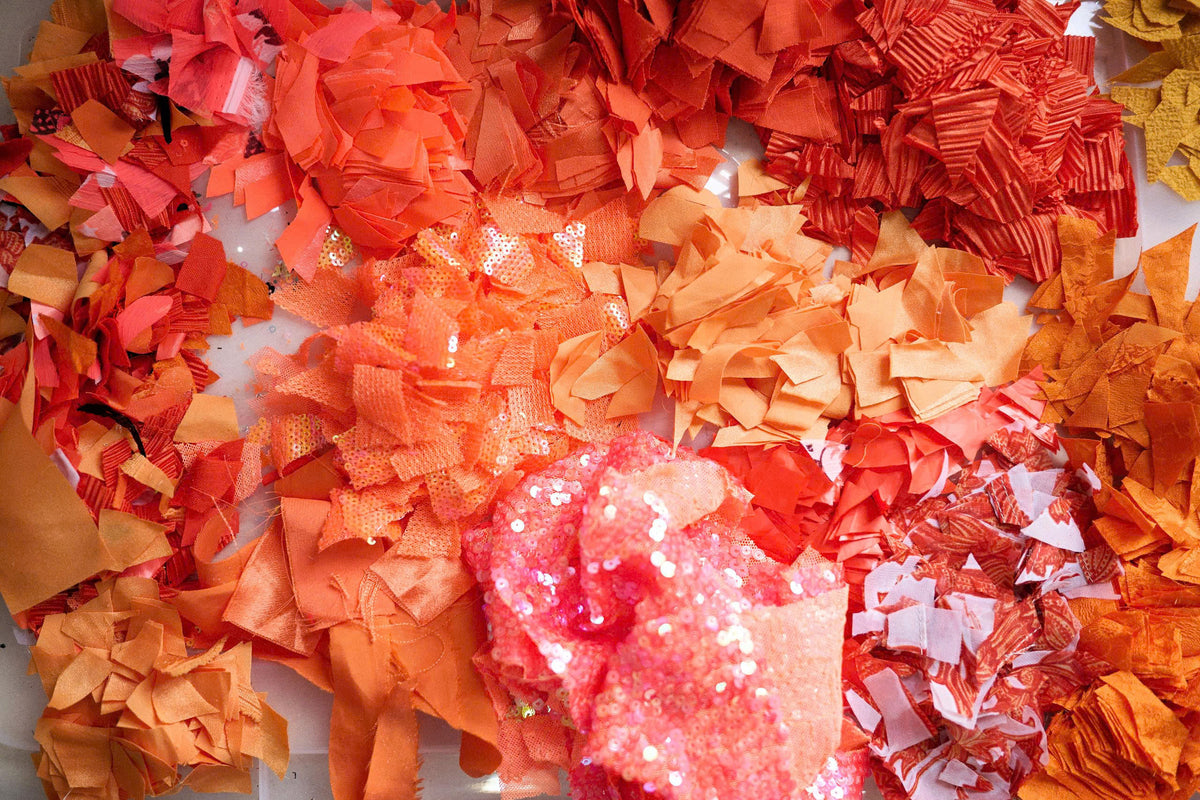
Sorting into colours, prints & textures
Every scrap is hand-sorted by colour, print, and texture before it's ever cut.
03
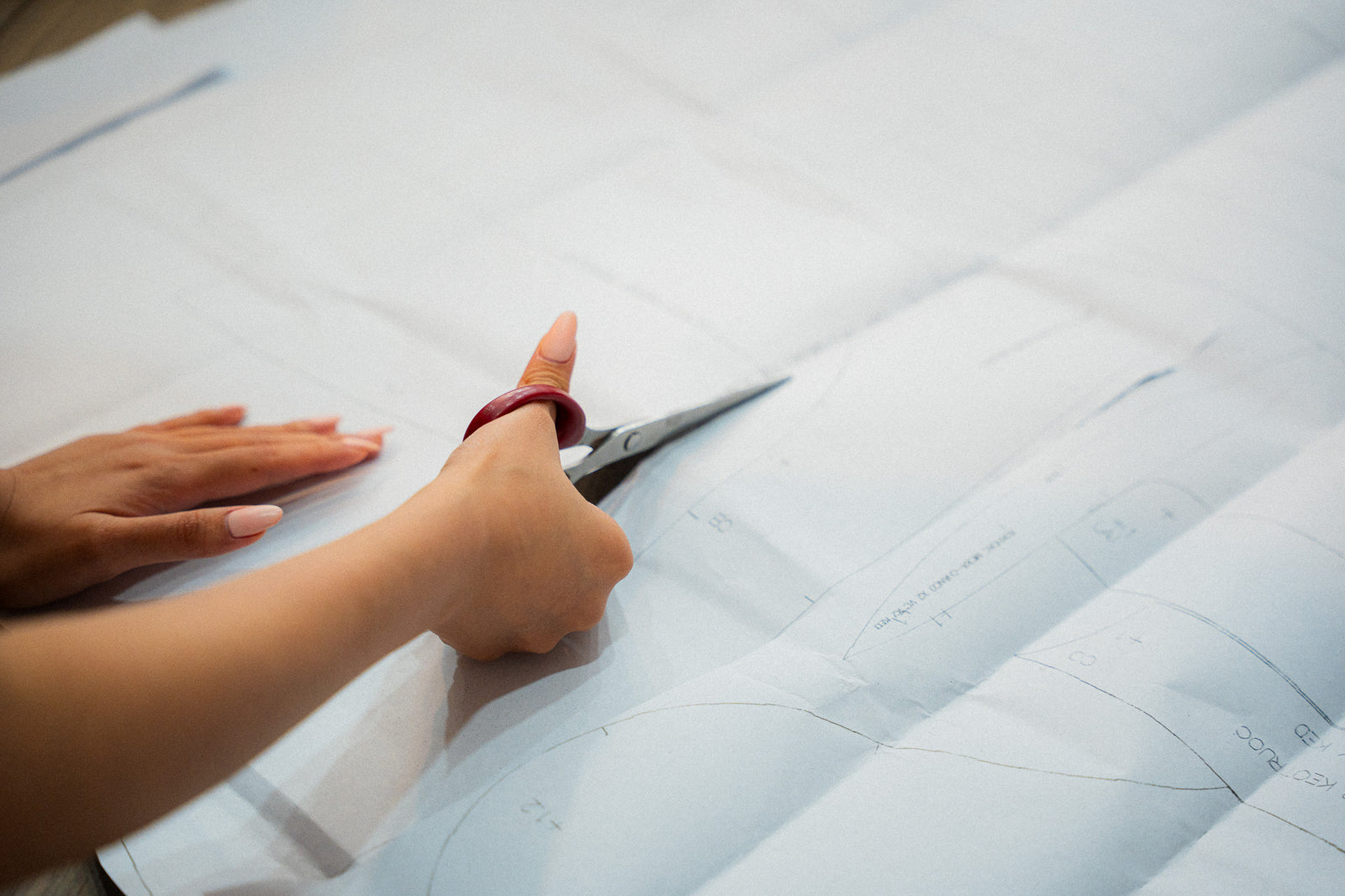
Cutting
Pieces are cut to nest tightly against what's already there, minimizing anything left over.
04
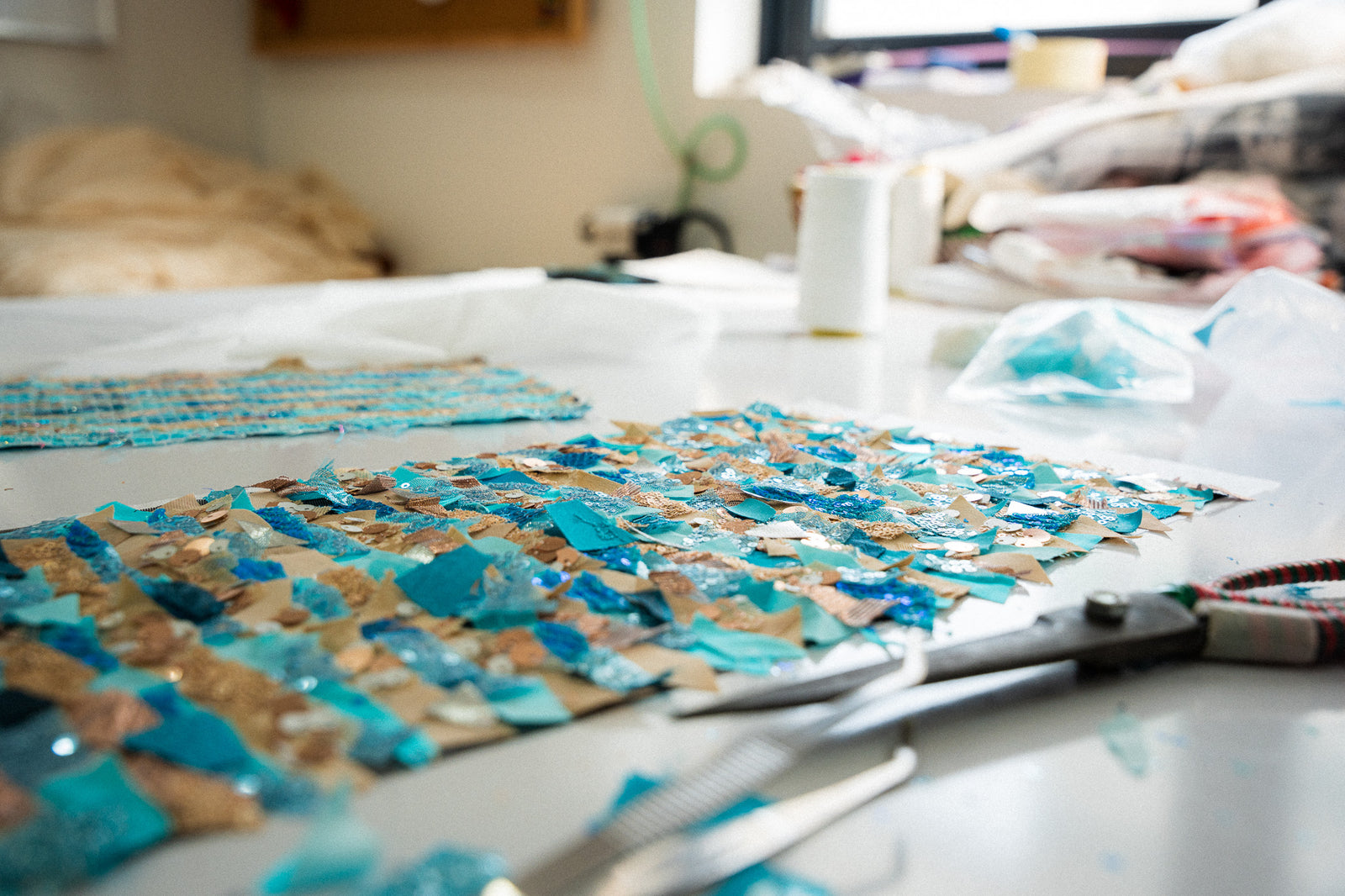
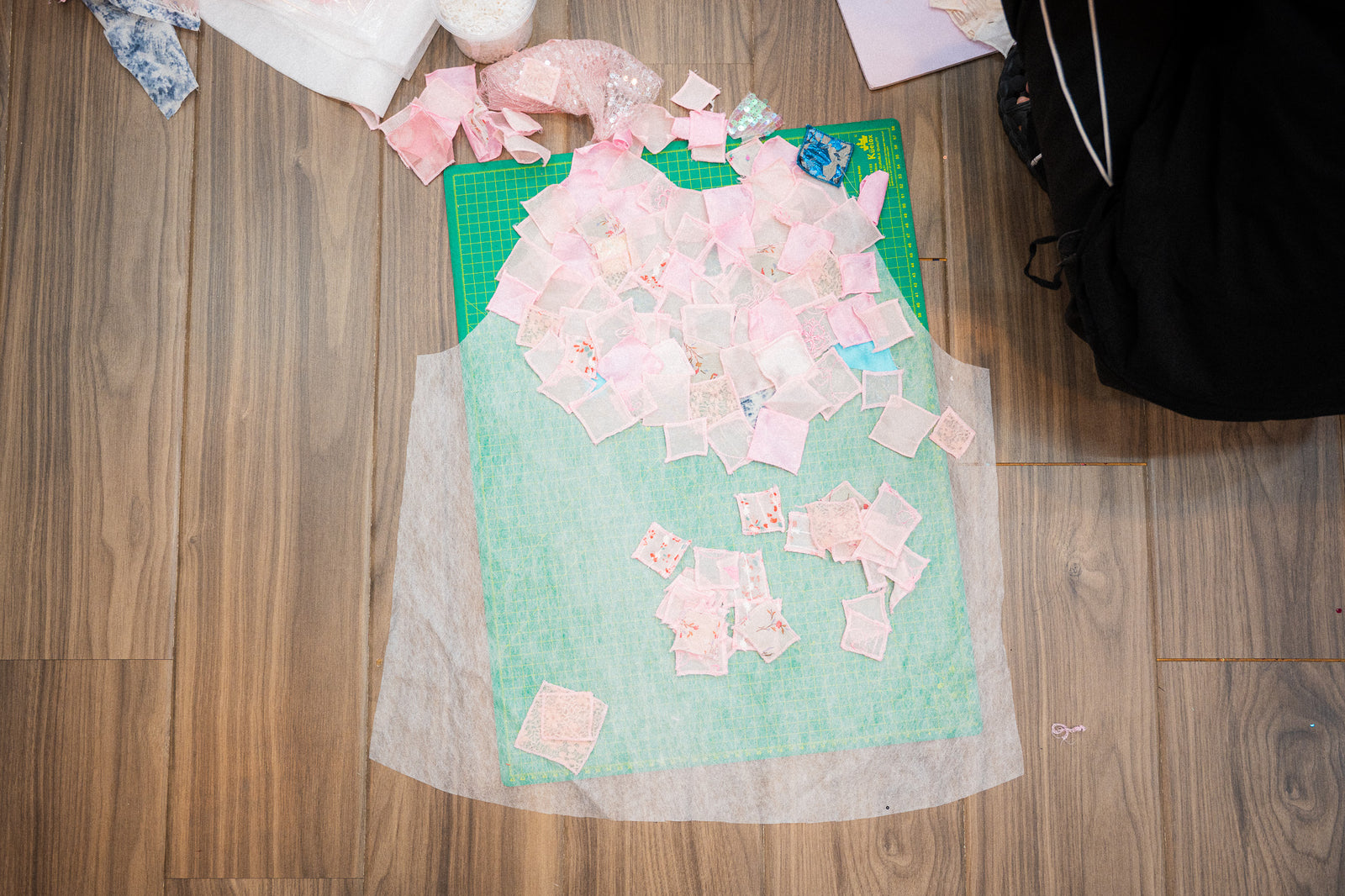
Patching & quilting
Sorted pieces are patched and quilted together by hand into new, considered fabric.
Why It Matters
No offcuts. No excuses.
Fabric with plenty of life left in it is discarded before it's ever worn — offcuts, deadstock, factory remnants. At KHAAR, we collect that fabric before it reaches a landfill and rebuild it into considered, wearable garments.
Every piece is nested against the shape of the fabric that's already there, so almost nothing from that roll ever goes to waste.
In the Atelier
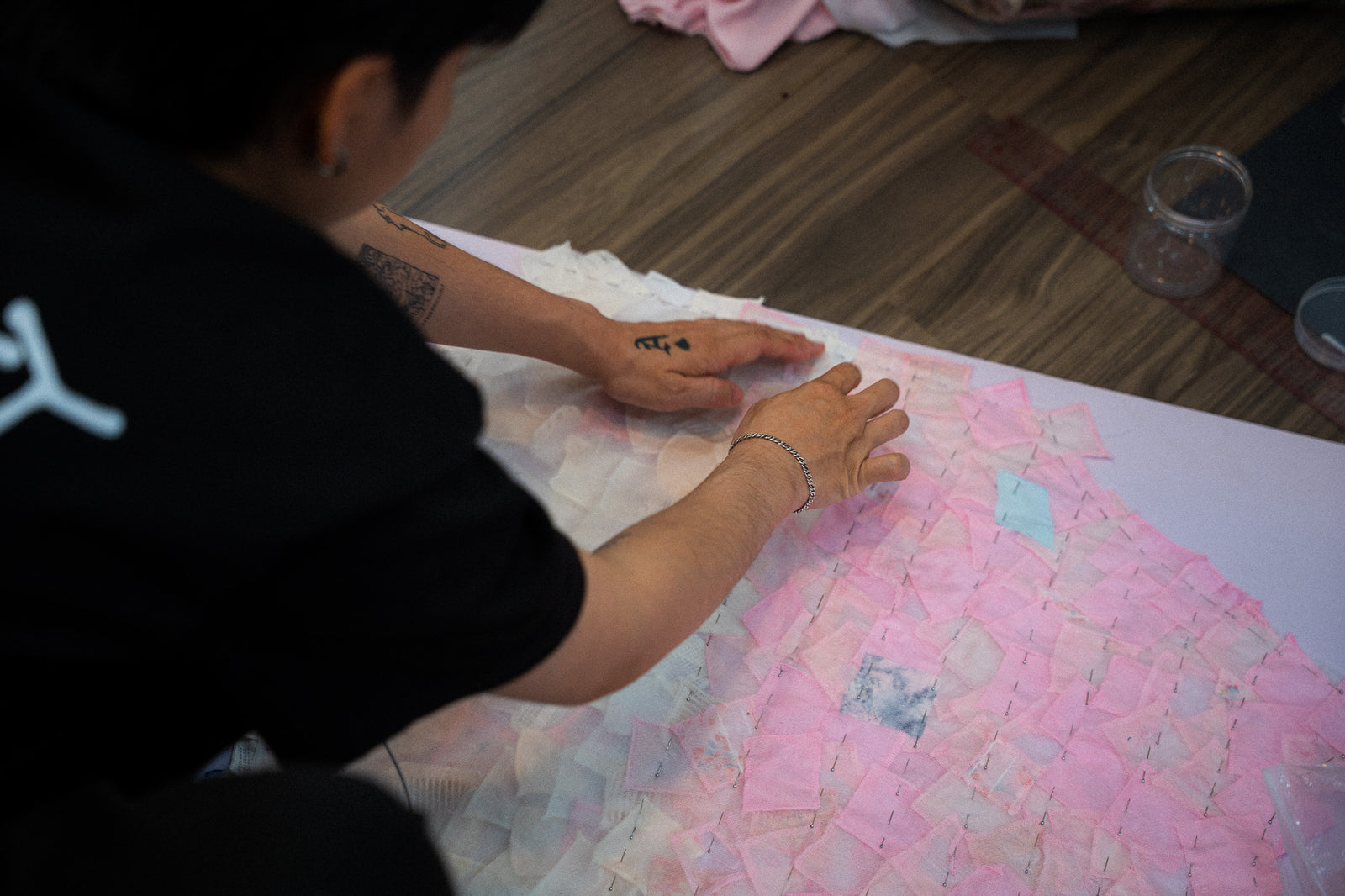
The Details
What zero waste actually means
01
Materials we use
We work almost exclusively with offcuts, deadstock, and factory remnants of natural fibres — cotton, linen, and other materials that biodegrade honestly rather than shedding microplastics.
02
What we avoid
Virgin synthetic fabric, overproduction runs, and any process that treats fabric as a disposable input rather than a finite resource.
03
Our cutting standard
Every pattern is nested against the actual shape of the fabric on hand, not a standard bolt — so utilization varies by batch but consistently lands above 95%.
04
Where it's made
Every garment is cut and sewn by our small team in Ho Chi Minh City, close to where the fabric is rescued, so nothing travels further than it has to.
Natural & Biodegradable
The Fabrics We Champion
We constantly look to feature the latest and most innovative eco-friendly fabrics made from natural fibres.
Cupro
S. KoreaA regenerated cellulosic fibre made from cotton waste — a vegan, more sustainable alternative to silk.
Pineapple Tusk
VietnamDerived from pineapple leaves, the agricultural waste of pineapple farming — a premium textile that helps reduce CO2 emissions.
Rayon
ChinaA man-made cellulosic fibre derived from wood pulp. As a plant-based fibre, rayon is inherently non-toxic.
Lyocell
JapanSourced from eucalyptus wood pulp using a closed-loop process that recycles solvents, requiring less water and chemicals.
Hemp
IndiaA fast-growing, sustainable plant requiring minimal pesticides and water, known for improving soil health.
Questions
Common questions
Is "zero waste" ever really zero?
Practically, no. A small amount of trim and thread waste is unavoidable. We use "zero waste" to mean our pattern layouts are engineered to eliminate offcuts, typically landing above 95% material utilization compared to the industry norm of 80-85%.
Where does the fabric actually come from?
Offcuts, deadstock, and factory remnants sourced directly from mills and garment factories across Vietnam, fabrics that already exists but would otherwise be discarded or landfilled.
Does zero waste mean every piece looks the same?
No, because the fabric on hand varies batch to batch, our patterns are re-nested each time, which means small variations in panel placement are part of the design, not a flaw.
How does this affect pricing?
Sourcing and cutting this way is more labor-intensive than mass production, but it avoids the cost of virgin fabric entirely . The two roughly balance out, keeping prices comparable to considered, small-batch fashion.